Stop Memorising Curly Arrows!
Stop memorising organic mechanisms. Start understanding the chemistry behind them.
You've revised the reactions and learnt the mechanisms. But when an unfamiliar exam question appears, do you know where the electrons go, which bonds break and how to work out what happens next?
Join my free masterclass to discover a more logical way to approach any organic mechanism question and avoid common OCR exam mistakes.
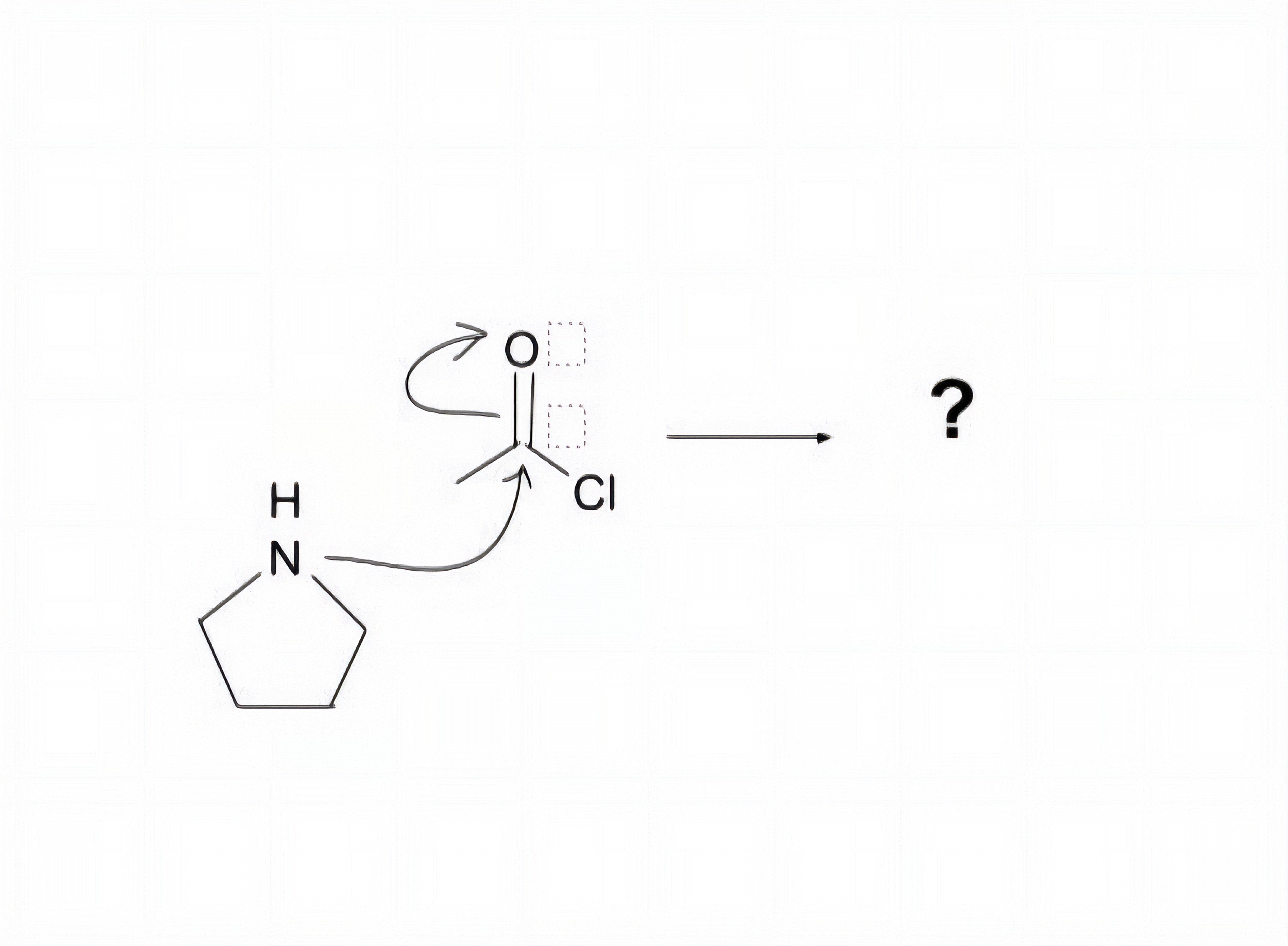
Do you know what is formed in the next step? Keep scrolling to see if you're right!
OCR A Specialist
Current Examiner Guidance
You've Memorised the Mechanisms.
So Why Are You Still Losing Marks?
You know that that nucleophile attacks the carbon. You've practised drawing the curly arrows. You might even remember entire mechanisms from your revision notes.
But then the exam question looks a bit different from what you learnt. The reactant looks unfamiliar. A mechanism is only partially completed. Or you're asked to explain why a particular reaction happens.
Suddenly, what you've memorised doesn't seem quite enough.
Curly Arrow Confusion
You know the reagents, but you're unsure exactly where the curly arrow should start or point.
Nucleophile or Electrophile?
You know a nucleophile is an electron pair donor... but you struggle to identify which species is the nucleophile in a mechanism.
Which Bonds Break or Form?
You can't always predict which bond breaks, which forms, whether there's a charge or what the intermediate should look like.
Unfamiliar Exam Questions
You can reproduce familiar mechanisms from memory, but struggle when the reaction is presented in a different context.
The problem isn't always how much chemistry you know. It's whether you understand the principles well enough to apply them to unfamiliar exam questions.
Organic Mechanisms Aren't Just A Bunch Of Arrows to Memorise.
They're a way of showing how electrons move during a reaction.... and more.
Once you understand the role of electron pairs, dipoles, nucleophiles and electrophiles, you'll see many organic mechanisms are actually quite logical.
Instead of trying to remember every arrow as an isolated need-to-know, you can begin to work out why electrons move in a particular direction and what that means for the specific reaction you're looking at.
That's the thinking we'll explore together in this free masterclass.
MEMORISING
Trying to recall every arrow from a diagram.
- ✕Panics when a molecule is rotated or drawn with different carbon chains
- ✕Guesses whether the arrow starts at a bond or an unshared electron pair
- ✕Struggles to complete partially drawn mechanisms in novel contexts
UNDERSTANDING
Using electron movement and chemical principles to work out what happens next.
- Works out arrow directions from electronegativity and dipoles
- Knows precisely where the electron pair originates and attacks
- Deduces intermediates logically even in unfamiliar OCR questions
Understand the Logic Behind Organic Mechanisms
In this free live masterclass, I'll introduce you to the principles that help make organic mechanisms easier to understand and apply.
Follow the Electrons
Understand what curly arrows represent, where they should start and where they should point.
Recognise the Reacting Species
Learn how to identify nucleophiles, electrophiles and assign dipoles when determining how a reaction proceeds.
Apply the Principles
See how these ideas help you interpret incomplete mechanisms and approach unfamiliar OCR-style questions.
You'll also gain insight into common exam-technique mistakes and what examiners expect to see in mechanism answers.
Learn What Examiners Actually Look For
In OCR A-Level Chemistry, understanding the reaction is only part of the challenge.
You also need to communicate that understanding through accurate diagrams, correctly positioned curly arrows and appropriate chemical notation.
A small mistake in where an arrow starts or points can mean missing a marking point, even when you know which direction the arrow goes!
As a current A-Level Chemistry examiner and OCR A specialist, I'll share the kinds of mistakes students commonly make and show you how to approach mechanism questions more precisely.
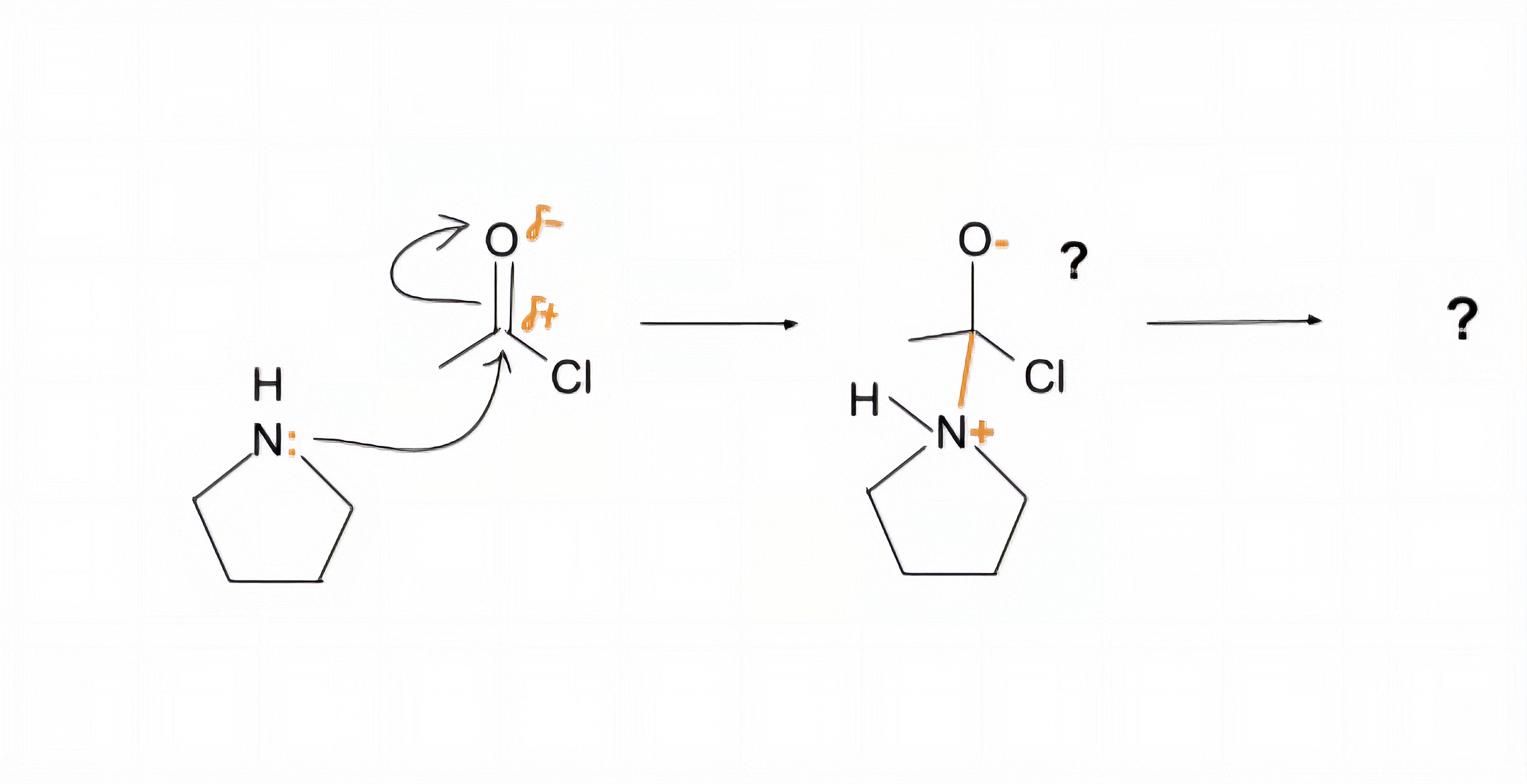
"Did you work out the correct intermediate?"
Clear guidance on curly arrows, dipoles, charges and bond fission.

Hi, I'm Ope.
A-Level Chemistry tutor, OCR A specialist and current examiner.
For more than 15 years, I've helped A-Level Chemistry students strengthen their understanding and improve the way they approach exam questions.
I've worked with many capable, hardworking students who revise consistently but struggle to translate their knowledge into the precise answers examiners are looking for.
That's why my teaching focuses on more than simply knowing the content. I help students understand the reasoning behind the chemistry, recognise what questions are testing and communicate their answers accurately.
In this free masterclass, I'll bring that same approach to organic reaction mechanisms. My aim is to help you see curly arrows as something you can understand and work through logically, rather than diagrams you have to memorise.
Helping Students Turn Understanding into Better Exam Answers
Feedback from students and parents I've worked with.
"I used to only get 60-ish% in organic, but now I'm averaging 80% when I do papers!"
"I just wanted to let you know I got an A*! Thank you for all your help"
"I increased my predicted grade from a C to a B."
"My daughter likes the exam style questions and it helps to boost her confidence."
"She is finding the sessions so beneficial."
"Ope is a treasure, I'm so glad we found her"
Is This Masterclass for You?
You'll get the most from this session if you're studying OCR A-Level Chemistry and want to understand organic mechanisms rather than simply memorise them.
THIS IS FOR YOU IF:
- ✓You're in Year 12, Year 13 or resitting OCR A Chemistry.
- ✓You've encountered organic reaction mechanisms but still find them confusing.
- ✓You struggle to work out where curly arrows should go.
- ✓You want to approach unfamiliar exam questions with greater confidence.
- ✓You're willing to think through the chemistry and participate in the learning.
THIS MAY NOT BE FOR YOU IF:
- ✕You're looking for a complete revision course covering every organic reaction.
- ✕You want to memorise model answers without understanding the underlying chemistry.
- ✕You're expecting an entire A-Level Organic Chemistry syllabus to be taught from scratch.
You don't need to know every mechanism before joining. You just need to be ready to understand them differently.
Ready to Make Sense of Organic Mechanisms?
Join me on Tuesday 15 December at 6:30 pm for a free live masterclass exploring the principles behind organic reaction mechanisms and how to apply them to unfamiliar OCR A-Level Chemistry questions.
Learn how to approach curly arrows more logically, recognise common mistakes and develop a stronger foundation for answering mechanism questions.
Mastering Organic Mechanisms
Reserve Your Free Place
Takes 30 seconds. No card required. Instant confirmation.
Everything You Need to Know
Have a question before registering? Here are the most common queries.
Is the masterclass really free?
Yes. The masterclass is completely free to attend. There are no hidden fees or payment details required.
Is this suitable for Year 12 students?
Yes. The session focuses on fundamental principles behind organic mechanisms that are relevant across A-Level Chemistry. Year 13 students may recognise more of the reaction examples, while Year 12 students will build essential confidence early.
Is it suitable for students studying AQA or other exam boards?
The underlying chemistry principles of electron movement, dipoles and nucleophilic attack are universal to all A-Level Chemistry specifications, but this masterclass is designed specifically around OCR A-Level Chemistry (OCR A) mark schemes and phrasing.
Do I need to know all the organic mechanisms already?
No. The aim is to help you understand the reasoning behind mechanisms. Some familiarity with basic bonding, electron pairs and introductory organic chemistry will be helpful, but you do not need to have memorised mechanisms beforehand.
Will we practise exam questions?
Yes. The session will include authentic OCR-style mechanism examples to demonstrate how these principles are applied to real exam questions and where students often drop marks.
Will there be a recording?
There will not be a replay available. You are strongly encouraged to attend live and follow along to get the most out of the session.
What do I need to attend?
A laptop or tablet with an internet connection is recommended, along with a notebook and pen so you can draw along and annotate curly arrows during the session.
What happens after I register?
You'll see instant confirmation on screen with your seat details, and you will receive email reminders with the secure live stream access link as the date approaches. You will also be sent a few chemistry tips and tricks, but you can unsubscribe at any time.
Stop Guessing Where the Curly Arrows Go.
Start understanding why they go there.
Organic chemistry makes up a significant portion of the A-Level Chemistry syllabus and mechanisms cost so many students marks unnecessarily.
Join my free live masterclass and discover a more logical approach to organic reaction mechanisms.
No replay, join live and follow along to get the most out of the session
Free registration | OCR A-Level Chemistry